
Not every water heater problem is an emergency, but the ones that are get more expensive with every minute. The most common one is a ruptured tank. Because the cold inlet stays connected to a failed tank, the leak does not end when the heater is empty; it can keep going until someone closes a valve, soaking subfloors, carpet, and whatever sits underneath. Other urgent signs include a relief valve that is releasing water again and again, which means the tank is running too hot or at too much pressure, a sudden jump to scalding water at the tap, and a rotten-egg odor near a gas unit. For homeowners in Murray, UT, any of these deserves a phone call right away rather than a wait-and-see approach.
Right away, rule out gas. A rotten-egg odor near the heater means everyone leaves the house, nobody operates switches or appliances on the way out, and the call goes to your gas utility or 911 from a safe distance. If there is no gas smell, focus on stopping the water: close the cold supply valve at the top of the heater, or the main shutoff if that valve is frozen in place. Next, cut the energy to the unit, turning a gas control to OFF or switching off the dedicated breaker on an electric model, as long as you are standing on dry ground. Do not try to stop a discharging relief valve. Plugging it removes the last safeguard against a tank that is overheating. Once things are isolated, call (801) 998-0110 for help.
When you reach Murray Water Heater, we start by asking what you see, hear, and smell, and we confirm the shutoffs are holding before a truck rolls. We dispatch as quickly as we can and give you a realistic time frame rather than a promise we cannot keep. Our trucks carry the parts behind most urgent failures, including relief valves, thermocouples, flame sensors, heating elements, thermostats, drain valves, and supply connectors, so many emergencies end with a repair on the spot. When the tank itself has failed, patching it would not be honest work, so we explain replacement options, secure the area, and restore hot water as soon as the new heater is in. For emergency water heater repair in Murray, call (801) 998-0110.
What homeowners call us about most is Water Heater Repair in Murray. Either is a good place to start.
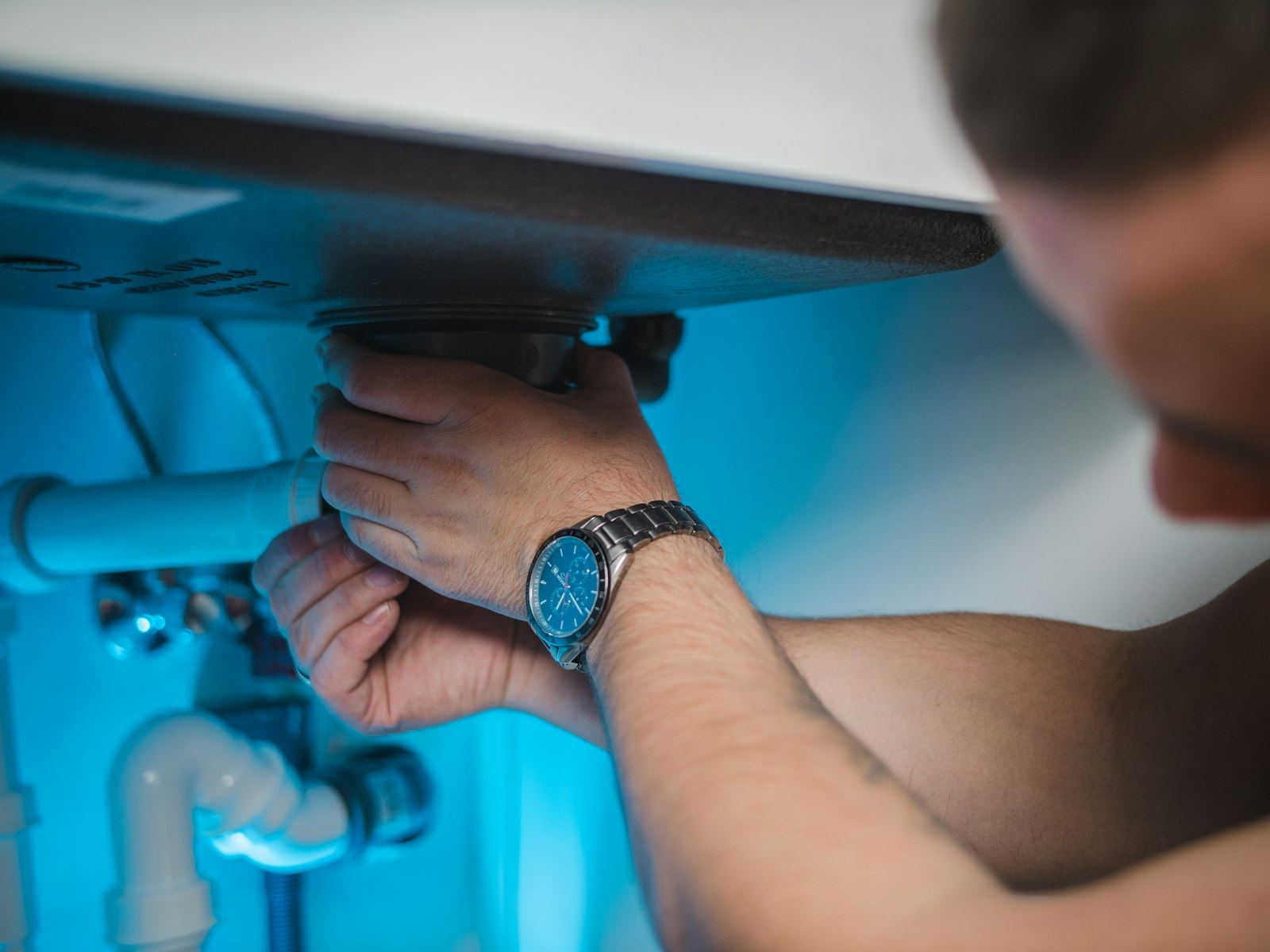
Warning Signs to Watch For
A heater that is starting to struggle rarely hides it for long, and the clues are easy to spot once you know them. These are the red flags our technicians see most often before a breakdown:
- Signs of scorching or backdrafting around the base or top of a gas heater
- Sudden loud knocking or boiling sounds coming from inside the tank
- Tap water hot enough to burn, even at the usual setting
- A T&P valve that releases water repeatedly instead of staying closed
- Water pooling around the base of the heater or spreading across the floor
- An electric water heater that keeps tripping its circuit breaker
- No hot water at all, even after waiting for the tank to recover
- A rotten-egg smell near a gas water heater (leave first, and call the gas utility)
A Slow Leak Never Stays Slow
Tanks rarely fail all at once. They corrode from the inside for months, and the warning signs show up long before the floor gets wet. If you notice any of these signs, contact Murray Water Heater at (801) 998-0110 for a prompt inspection.
Need Help With Emergency Water Heater Repair?
Our experienced technicians are standing by to help.
Get Help: (801) 998-0110Your Emergency Water Heater Repair Questions Answered
The Benefits of Professional Emergency Water Heater Repair
A water heater emergency stacks several hazards in one small space. There is water on the floor near a 240-volt circuit on electric models, or near a gas valve, burner, and flue on gas models. There is a tank holding water at high temperature and household pressure. And there is a safety valve that, if it is discharging, is doing so for a reason. Homeowners sometimes try to stop the relief valve by capping it, tighten a leaking fitting until it cracks, or relight a pilot beside a gas smell, and each of those can turn a bad afternoon into a real disaster. The safest moves for a homeowner are the ones described above: leave for gas, then shut off water and energy, then call for help.
A trained technician brings the right order of operations and a truck full of the likely parts. Our team confirms the heater is isolated, tests for gas leaks with a detector and soap solution rather than guessing, checks household water pressure and thermal expansion when a relief valve has been discharging, and inspects the vent for proper draft before a gas unit is restarted. Equally important, we tell you honestly when a heater can be repaired and when it cannot. A leaking seam or rusted-through bottom cannot be fixed, while a failed valve, fitting, or element usually can, and the difference is often a modest repair bill versus the cost of a whole new unit. You get that answer before any work begins.
What to Expect From Our Team
Every visit follows a step-by-step method built around testing first and replacing parts only when the readings call for it. Here's a look at each step our team takes:
Phone Triage & Shutoff Help
We start on the phone: confirm there is no gas odor, help you close the cold supply and turn off gas or power, and talk through what to move out of the water's path.
Arrival & Stabilization
You get a straight answer on timing, not a promise we cannot keep. Once on site, we check the shutoffs, the gas or electrical supply, and the vent before touching the heater itself.
Repair or Honest Replacement
We trace the real cause, whether that is a worn valve, a rotted fitting, or a dead element, and repair it on the spot when the part is on the truck.
Safe Restart
Restarting correctly matters. We fill the tank before power or gas returns, check fittings and the relief valve for leaks, verify draft on gas units, and leave the thermostat near 120F.
Tips to Keep Your Water Heater Healthy
Most of the failures we see could have been delayed for years with basic upkeep. Here are our recommendations:
- Test the T&P valve annually; a valve that sticks or weeps afterward should be replaced
- Annual flushing keeps sediment from causing the rumbling and hot spots that lead to leaks
- Know where the heater shutoff and the main water valve are, and make sure everyone in the house does too
- Store chemicals and flammables far from the burner, and keep the area around the heater uncluttered
- Ask about a drain pan and drain line, especially for heaters in attics, closets, or above finished rooms
- Consider an automatic leak shutoff that stops the cold supply the moment water hits the floor
- Set the temperature around 120F, which protects against burns and slows tank wear
Comparing DIY and Professional Work
Relighting a pilot by following the label is one thing. Diagnosing a gas valve, a burned-out element, a dirty flame sensor, or a tankless error code calls for meters and know-how that a pro brings. Here's how the two approaches stack up:
| Consideration | DIY Attempt | Professional Service |
|---|---|---|
| Gas Safety | Tempted to relight or poke around | Evacuate, utility clears it, then leak testing |
| Water Control | Unsure which valve to close | Water stopped and drain-down done properly |
| T&P Discharge | Valve capped or plugged, a dangerous move | Pressure and expansion checked, valve replaced if worn |
| Electrical Hazard | Handling 240V near standing water | Power tested off and area made dry and safe |
| Diagnosis | Symptom treated, source unknown | Leak and failure point pinpointed |
| Result | Fix that may not hold overnight | Hot water back and connections proven dry |
Book a Visit Today
Every day a leak or a failing part goes unchecked puts more stress on the tank. Get Murray Water Heater on the job today.
Tap to Call (801) 998-0110Areas We Serve for Emergency Water Heater Repair
We bring emergency water heater repair to homes and businesses in town and across the nearby communities. Pick your area to see local details.